Rongomaiwahine became the matriarch of many
related
East Coast tribes after being wooed by
Kahungunu.
|
|
| Kōtiro Māori e, taku ripene pai O makawe hoki nga ngaru ate tai Ko te pare huia He tohu rangatira e Ko Rongomaiwahine O Nukutaurua e. |
Maori lass, my gay ribbon, your hair is like the ripples of the tide a topknot of huia feathers an aristocratic symbol Rongomaiwahine of Nukutaurua. |
Rongongia tō ataahua E te whenua katoa Tae atu te kohimuhimu Ki a Kahungunu e Ko wai te wahine e Whakakapakapa te manawanui? Ko Rongomaiwahine O Nukutaurua e |
Your beauty is known throughout the land then the whisper reaches even to Kahungunu. Who is the woman who breaks so many hearts? It is Rongomaiwahine of Nukutaurua. |
Piki ake, kake ake 1 Ki Te Mahia e Ka kite tana hiahia Aue Ko Rongomai e. Haere mai e tama rukuhia Nga pāua a Tangaroa nei Ma Rongomaiwahine O Nukutaurua e. |
He travels up the coast to Mahia peninsula and sees his desire. Oh yes! Oh Rongomai! Come young man, dive for the paua belonging to Tangaroa as a gift for Rongomaiwahine of Nukutaurua. |
| Nāhau rā Kahungunu Tangata whakanene Na te pāua I raru ana koe Rongomai e Maranga mai e hine Ka haere tāua e Ki Maramatea O Nukutaurua e. |
Kahungunu has the gift, of being a trickster. It was the paua that defeated you Rongomai. Come young lady Let us two travel to Maramatea of Nukutaurua. |
Note
1. Piki ake, up the coast. He went
from Whangara to Mahia. On Pakeha maps this would be going
DOWN the coast. But Maori maps faced south: Wellington harbour
was the mouth of Maui's fish. So Kahungunu went UP the
coast. See the map below.
Kaulana Nā Pua
Kaulana Nā Pua (or "Kauranga Nga pua" in the NZ Maori dialect of Polynesian) was composed by Eleanor Kekoaohiwaikalani Prendergast in 1893 to protest the American overthrow of Queen Liliʻuokalani and the Hawaiian Kingdom.
| Kaulana
nā pua aʻo Hawaiʻi Kūpaʻa mahope o ka ʻāina Hiki mai ka ʻelele o ka loko ʻino Palapala ʻānunu me ka pākaha Aʻole aʻe kau i ka pūlima Maluna o ka pepa o ka ʻenemi Hoʻohui ʻāina kūʻai hewa I ka pono sivila aʻo ke kanaka |
Famous are the flowers (children) of Hawaiʻi Ever loyal to the land When the evil-hearted messenger comes With his greedy document of extortion Do not fix a signature To the paper of the enemy With its sin of annexation And sale of the civil rights of the people |
Other Kotiro Maori songs
This is not the Kotiro Maori song composed by Kingi Ihaka, and sung by Maisey Rika.
| Kotiro
Maori, hei ha hei E poi atu nei, hei ha hei E matakitaki ko te iwi pakeha |
Maori girl, hei ha hei Twirl your poi, hei ha hei The tourists are watching you. |
Rongomaiwahine
Rongomaiwahine
was the principal ancestor of the people of the Mahia
Peninsula. She was a woman of very high rank and a famous
beauty, descended from both Ruawharo, the tohunga of the Takitimu
voyaging waka, and Popoto, commander of the Kurahaupo
voyaging waka.
The peninsula was originally known as Nukutaurua,
a name that is still applied to parts of the area.
When the Takitimu arrived from Tahiti, some 2 centuries
after the first Polynesian settlers, with many
distinguished and learned tohunga on board, Ruawharo gave
the name Te Mahia to the peninsula because it resembled a
part of his tribe's original homeland.
Kahungunu
Kahungunu was the great-grandson of Tamatea-mai-tawhiti,
(Tamatea from Tahiti) the captain of the Takitimu
voyaging waka.
And he was the son of Tamatea-pokai-whenua, (Tamatea
encircling the land) New Zealand's first extreme sports
enthusiast. Kahungunu's father took a 50-man canoe around
all of New Zealand, and then arriving back in Cook Strait,
decided to take a bit of a cross-country short-cut home to
Tauranga.
He and his 50 men poled their big canoe all the way up the
Whanganui river, portaged it across to Lake Rotoaira,
navigated down the Tongariro river, sailed across Lake
Taupo, and started down the Waikato river.
He tried to shoot the Huka Falls in that big canoe, but he
and most of his men were drowned in the attempt. (He
must have been quite crazy, but he is my favourite old
New Zealand hero - JA)
Kahungunu (also
known as Kahu-hunuhunu) inherited the daring,
energy and leadership of his two Tamatea ancestors. He was
born at the Tinotino pā in Ōrongotea (later named
Kaitāia). His father subsequently moved to the Tauranga
area, where Kahungunu grew to adulthood.
Tall and handsome, he was renowned for his charismatic
leadership. He supervised the planning and building of
entire villages, the irrigation and drainage of
cultivations, the gathering of food, and the arts of
carving, tattooing, weaving and canoe making. He married
many women during his lifetime, and his many descendants
later made many strategic marriages, creating a network of
alliances.
Kahungunu's marriages in chronological order
They follow his
southward migration down the East Coast of the North Island,
though specific tribal traditions can vary the exact
sequence.
Hinetapu
at Kaitāia (his birthplace and
early home)
Widely recorded in tribal narratives as his first wife, with
whom he had his initial
children, Tamateaiti, Haruatai, and
Poupoto, before leaving the far north to travel south.
Waiarai
at Whakatāne
Met as he moved down the coast, with whom he had a child
named Pō Tirohia
Te Hautāruke
at Ōpōtiki, 20 km east of
Wakatane.
Married further along his journey; they had three children,
Rākei, Whakatau, and
Papake.
Ruarauhanga
at Whāngārā,
20 km up the coast from Gisborne.
Daughter of the chief Wairau, with whom he had
children including Ruaroa
and Rongomaire.
Ruareretai
at Popoia fortified pa, 20 km
inland from today's Gisborne.
Daughter of the principal chief Ruapani; they had a daughter
named
Ruahereheretīeke.
Hinepūariari
at Whareongaonga
Married shortly after leaving Tūranga, with whom he had
Pōwhiro and another child.
Kahukurawaiaraia
at Whareongaonga
Sister to Hinepūariari, with whom he had children named
Tuaiti and Pōtirohia.
Rongomaiwahine
at Nukutaurua on the Māhia
Peninsula
His most famous and legendary union. He traveled to Māhia
specifically to win her,
and their marriage cemented the
foundation of the Ngāti Kahungunu iwi.
Pou Wharekura
at Kaiwhakareireia pā
A high ranking woman he took as his wife in his later years
after she was captured in battle. She choose Kahungunu over
younger captors and gave
him a daughter, Ruatāpui.
Kahungunu's pursuit of Rongomaiwahine
She and her first husband Tamatakutai, a carver, lived at
Tawapata, on the eastern side of the Mahia Paeninsula.
 . |
First he set about gaining the approval of Rongomaiwahine's
people. He climbed a hill behind the village at Tawapata,
where he watched the shags diving, and he practiced holding
his breath until the birds reappeared.
Then he went diving himself: holding his breath for long
periods, he filled several containers with paua (abalone
shellfish) - enough for all the occupants of the village.
When he surfaced from his final dive he had covered his
chest with the paua, and everyone was very impressed.
Kahungunu then set out to create discord between Tamatakutai
and Rongomaiwahine and her husband.
One version of the story says that he ate paua roe and
surreptitiously farted under the couple's bed coverings.
They accused one another and an argument resulted.
The next morning, Kahungunu joined Tamatakutai in the sport
of surfing in a canoe. Kahungunu took over the steering and
capsized it on a particularly large wave. Tamatakutai,
unable to swim, was drowned.
Another story tells how the meal of paua made Rongomaiwahine
fart continually during the night, inducing her to leave her
husband's side and go out to relieve herself at the distant
latine.... . And as she came
back, Kahungunu was waiting for her. This story says he
successfully wooed her that night, and thus changed the
whole Maori history of the East Coast.
After Rongomaiwahine took Kahungunu for her husband, their
principal pa was Maunga-a-Kahia. Rongomaiwahine had two
daughters by Tamatakutai and then three sons and two more
daughters by Kahungunu.
Some Maori identify themselves as both Ngati
Rongomaiwahine and Ngati Kahungunu. But the mana of
Rongomaiwahine is so great that those who are descended from
her first two daughters identify themselves only as Ngati
Rongomaiwahine.
Pakimana Ramond "Tommy" Taurima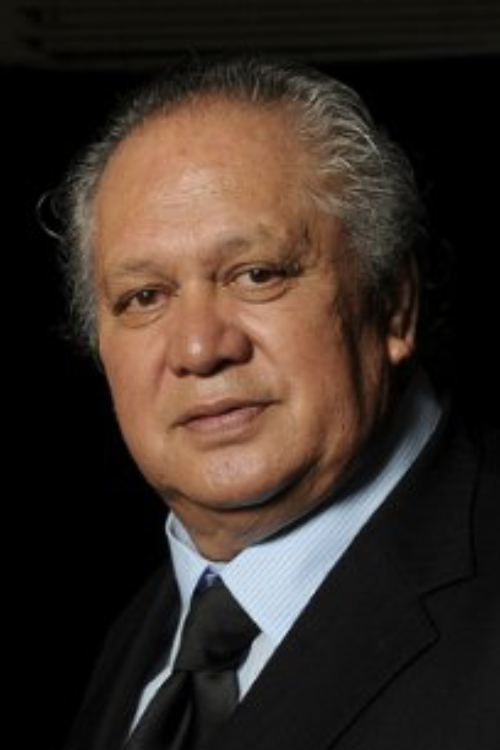
Tirama mai and Te Rina.
which gave young Maori and Polynesian people a basis for a career in the entertainment industry.
Published on the NZ Folksong website August 10, 2006, revised Aug 2009.
Origin of tune added Sept 2018, Kahununu's wives, Tommy's biography and visitor counter added Aug 2026.