From Awarua yesterday...
The last dozen lines of Pinepine now enter the realm of our dreams, of our imagination, beyond time, beyond distance and beyond individual identity, but a realm where truths are recognized by our subconscious mind (Te Kore?). Although addressed to his son, these lines give a message of hope to all who are attending his son's coming-to-manhood ceremony.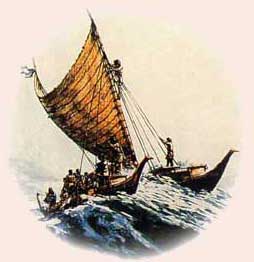 In
reality, their ancestors had crossed the Pacific Ocean
In
reality, their ancestors had crossed the Pacific Ocean from Hawaiiki to Aotearoa 400 years ago, but they still
felt so close to those intrepid navigators that the voyage
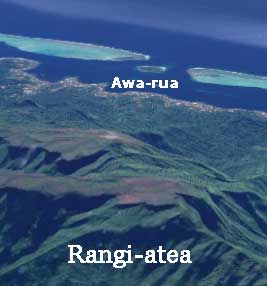
felt like only yesterday. Awa-rua, the harbour at
Rangiatea with two channels, was considered to be the
source of both evil and good things. Te hara i Awarua or
te marenga i Awarua referred to the bad things, while te
kura i Awarua referred to the good things. Warfare was
also considered to be an import from Awarua,
 presumably
because the first Polynesian settlers here had lived in peace and plenty until the arival of the technically advanced but domineering people from Awarua-Rangiatea-Tahiti. The boy was a kura from Awarua, but his death in battle would be a hara.
By imagining his tribe as that voyaging waka, the bard now creates word pictures of the possibility fo both hara and of kura, of disaster and revival, Ka mate, ka mate; ka ora, ka ora!