Maori Songs - Kiwi Songs - Home
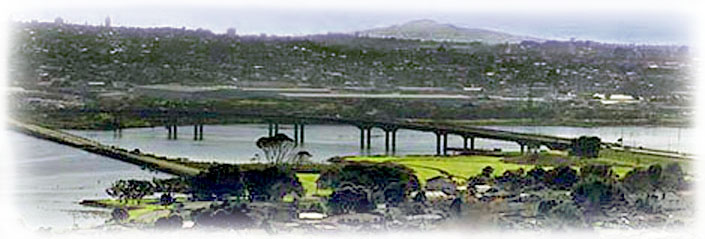
Te Arawa elder George Tait wrote it for his neighbour Deane Waretini Jr to sing, and in 1981 it became the first Maori language song to become Number One on the NZ charts. Here is the original version, recorded in Deane's garage in Henderson. Kevin Furey was the trumpeter.
Ki nga pou1 o te piriti
Äki, pakia mai rau
E nga tai2 kaha ra e
Pukepuke, i aue
Nga roimata e aku kamo
I rite ki te ngaru
Whati3 mai, whati mai
I waho e, whati mai.
is for the pillars of the bridge.
pounded, beaten, a hundred times
by the strong tides there
rising and falling, oh.
The tears in my eyes
are like the waves,
welling up, and spilling over here,
while outside, the waves are also breaking.
Spoken
"My concern is for the piles4 of the bridge,
constantly pounded by the strong tides.
The tears well up in my eyes
They are like the waves that break without."
Pukepuke, i aue
Nga roimata e aku kamo
I rite ki te ngaru
Whati mai, whati mai
I waho e, whati mai.
rising and falling, oh.
The tears in my eyes
are like the waves,
welling up, and spilling over here,
while outside, the waves are also breaking.
Footnotes
- Pou = supporting posts, poles, piles, pillars.
This word is most commonly heard in reference to the main
supports holding up the roof in a Maori meeting house.
- Tai = tides. This is a bridge in coastal waters, across Manakau harbour, at Auckland.
- Whati = waves breaking = rising up and splashing
all about.
- Piles. When Deane Jr recorded this, he spoke it with a slurred L, which sounds like he is speaking about the powers of the bridge. This has confused some people.
Here are the guitar chords.
Ki nga B pou o C7 te piriti
Äki, pakia mai F rau
E nga taikaha ra C7 e
Pukepuke, i au-F-e
Nga roimata e a-C7-ku
kamo
I rite ki te nga-F-ru
Whati mai, whati mai
I waho C7 e,
whati F mai.
Silenzio Fuori Ordinanza
Deane Waretini, Senior and Junior
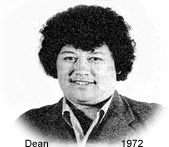 Adrian
Waretini was the youngest son of Deane, and he had moved
from Rotorua to Christchurch in his late teens as a
labourer. He was 21 when his dad died in 1967, and suddenly
realized what he had lost. So he started singing his dad's
songs to try and get close to his dad in spirit. He became
one of the big names in the Maori showbands of the 1970s.
Adrian
Waretini was the youngest son of Deane, and he had moved
from Rotorua to Christchurch in his late teens as a
labourer. He was 21 when his dad died in 1967, and suddenly
realized what he had lost. So he started singing his dad's
songs to try and get close to his dad in spirit. He became
one of the big names in the Maori showbands of the 1970s.
"You sound just like your dad," people said, and started calling him Deane also (or Dean Waretini).
George Tait was a cousin of Adrian/Deane Jr, on the farm
next to the Waretini's at Rotorua. He wrote the lyrics of Te
Piriti for him to sing, using the tune of Nino Rosso's
trumpet tune "Il Silenzio."
A Metaphorical Bridge
The bridge George Tait wrote about is a metaphorical one, connecting different cultures.
The maori word Pou is usually used for the posts or poles which are the main supports holding up the roof in a Maori meeting house. And the meeting house is also a symbolic building representing the crouching protective body of the iwi.
So the message of the song is that the social structures which keep different cultures in any country joined together must have strong foundations.
My thanks to Mr Waretini for providing this information.
Maori Songs - Kiwi
Songs - Home
Published on the web 15 October
2004,
Revised March 2011, Oct 2019, Jan 2022