| He
kakano ahau I ruia mai i Rangiateai And I can never be lost I am a seed, born of greatness Descended from a line of chiefs, He kakano ahau |
I
am a seed Scattered from Rangiatea And I can never be lost I am a seed, born of greatness Descended from a line of chiefs, I am a seed. |
|
Ki
hea ra au e hitekiteki2
ana |
Wherever
I may roam |
| Ka
tu ana ahau, Ka uhia au e oku tipuna4 My pride I will show That you may know who I am I am a warrior, a survivor He morehu ahau |
Whenever I stand, I am covered in mana by my ancestors My pride I will show That you may know who I am I am a warrior, a survivor I'm a survivor. |
|
Ki
hea ra au e hitekiteki
ana |
Wherever
I may roam |
Chords - E, D, A, and back to E
| E
He kakano ahau I D ruia mai A i Rangia-E-tea And I can never be D lost I am a A seed, born of E greatness Descended D from a line of A chiefs, He kakano a-E-hau. |
|
A
Ki hea ra au e hitekiteki ana |
| Ka
tu ana ahau, Ka u-D-hia au e A oku tipu-E-na My pride I will D show That you may A know who I E am I am a D warrior, a sur-A-vivor He E morehu a-E-hau. |
|
A
Ki hea ra au e hitekiteki ana |
Hohepa's
100% Te Reo Maori version
I ruia mai i Rangiātea E kore au e ngaro He kākano mai i Rangiātea Mai i ngā tīpuna, ngā rangatira He kākano ahau |
I am a seed Scattered from Rangiatea And I can never be lost A seed from Rangiatea from the ancestors, from the chiefs, I am a seed. |
| Ki
hea rā au e hītekiteki ana Ka mau tonu i ahau ōku tikanga Tōku reo, tōku ohooho Tōku reo, tōku māpihi maurea Tōku whakakai mārihi He reo rangatira He rākai ātaahua |
Wherever
I may roam I will hold fast to my traditions. My language is my cherished possession My language is the object of my affection My precious adornment A language of leaders A beautiful language |
| Ka
tū ana ahau Ka ūhia au e ōku tīpuna Ka tū kaha tonu ahau Kia kite koutou i tōku mana5 He mana taua6 nō onamata He mōrehu ahau |
Whenever
I stand, I am clothed in mana by my ancestors I will always stand strong So that you can see my power inherited from ancient times. I am a survivor. |
| Ki
hea rā au e hītekiteki ana Ka mau tonu i ahau ōku tikanga Tōku reo, tōku oho-oho, Tōku reo, tōku māpihi maurea Tōku whakakai marihi He reo rangatira He rākai ātaahua |
Wherever
I may roam I will hold fast to my traditions. My language is my cherished possession My language is my treasured Tiger Shell My precious ornament A language of leaders A beautiful language |
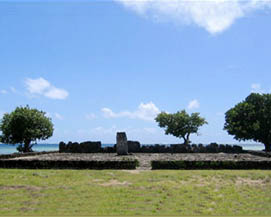
"E kore au e ngaro, he kakano i ruia mai i Rangiatea," I shall never be lost, a seed scattered from Rangiatea. Traditionally speaking, Rangiatea or Ra'iatea, an island north-west of Tahiti, held the ancient shrine at which the Tahitian people gathered to render homage to Io, the supreme god of Hawaiki Nui, the land that the ancestors of the Maori people came from. |
||||
|
But rather than asking where is Rangiatea, we might ask WHAT is it? In literal terms, Rangi atea is a " clear sky." Better might be the abstract "clear spiritual realm," or "a state of enlightenment." In i995 a Maori radical Frank Shaw burnt down Rangiatea, claiming the Anglican Church had betrayed Maoridom. |
||||
|
2.
Hitekiteki
|
||||
|
3.
Toku
mapihi maurea
The object of my affection
|
||||
|
4.
Ka
uhia au e oku tupuna 
Its
leaves spread out as a "cloak" over the ground covering
it the way convolvulus vines do. So uhi means
"to cover," and uhia is the passive "to be
covered."
|
||||
| 5.
Toku
mana my authority  Mana is an enduring, indestructible power of the divine
and it is inherited at birth: the more senior the
descent, the greater the mana. Every person with mana
remains its agent,
never its source.
Mana is an enduring, indestructible power of the divine
and it is inherited at birth: the more senior the
descent, the greater the mana. Every person with mana
remains its agent,
never its source. This divine choice is confirmed by the elders, and consecrated by a tohunga. It gives a person the authority to lead and organise, making decisions regarding environmental, social and political matters. |
||||
| 6.
Mana
taua Inherited authority  When
you find a word written as 'taua,' it can have
one of 3 pronunciations or several meanings: you must
determine its meaning by the other words it is with. When
you find a word written as 'taua,' it can have
one of 3 pronunciations or several meanings: you must
determine its meaning by the other words it is with.Taua, 1. be next in succession to a leadership role.
2. an old lady (South
Island)
3. a war party (in some districts)
4. that ("The thing that
I mentioned.")
Tauaa, 1. to mourn, to wear mourning clothes,
2. a
mourning wreath on a woman's head.
3. a war party (in
other districts)Taaua 1. we two, us two, you and me.
2. an old lady (in
the North Island)
|
|
|||
Born of Greatness
Hohepa Tamehana
Typos
|
||||

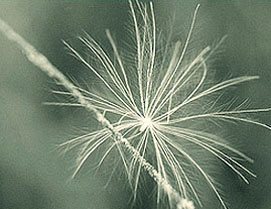 But
here we are reminded of "tiptoeing" thistledown,
drifting on the wind, just touching the earth and then
lifting off again, carrying its tiny seed onward to
fertile ground.
But
here we are reminded of "tiptoeing" thistledown,
drifting on the wind, just touching the earth and then
lifting off again, carrying its tiny seed onward to
fertile ground.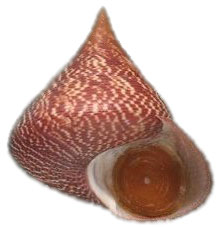
 The
eventual Maori Pop winners were Hemi Peke, Te Rau
Winterburn, Hayden Weke, Tomairangi Mareikura and Amomai
Pihama who formed Aaria.
They released 'Kei A Wai Ra Te Kupu' as their first
Urban Maori single, with an English version of it called
'You're The One I'm Thinking Of'.
The
eventual Maori Pop winners were Hemi Peke, Te Rau
Winterburn, Hayden Weke, Tomairangi Mareikura and Amomai
Pihama who formed Aaria.
They released 'Kei A Wai Ra Te Kupu' as their first
Urban Maori single, with an English version of it called
'You're The One I'm Thinking Of'.  Hohepa
Tamehana (Tuhoe) was
born in 1969 and raised at Opotiki. He moved
to Lower Hutt, studied at Taita College,
worked at Ford Motor Company. He taught in
Masterton and became tutor of Te Whanau Whanui
Ki Wairarapa. In the mid 90s he taught at the
bilingual Clover Park Mddle School in Manukau.
Hohepa
Tamehana (Tuhoe) was
born in 1969 and raised at Opotiki. He moved
to Lower Hutt, studied at Taita College,
worked at Ford Motor Company. He taught in
Masterton and became tutor of Te Whanau Whanui
Ki Wairarapa. In the mid 90s he taught at the
bilingual Clover Park Mddle School in Manukau.Kiwi Songs - Maori Songs - Home
Placed
on this website 20th October 2007
Revised, with 100% Maori version added, Oct 2023