NEW  ZEALAND
FO LK * SONG

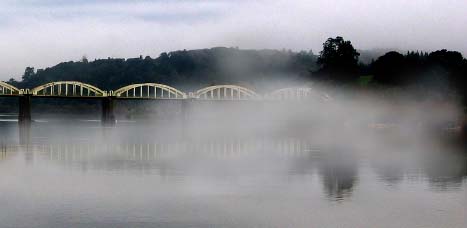
Mist on the Waikato
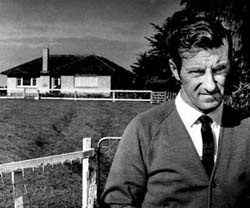
Arthur Allan Thomas
John Archer, 1980 - 1995

Songlist - Home

In 1970, Pukekawa farmer Arthur Allan Thomas was framed by Police Inspector Bruce Hutton for the murder of Jeanette and Harvey Crewe.

      There's a river mist rising up from the Waikato
      A cold grey mist like that night so long ago...


My wife came running down to the milking shed
"Have you heard the news
about Jeanette and Harvey Crewe" she said
      "There's bloodstains all around
      Len Demler says he found
His wee granddaughter crying in her bed."
      And a cold grey mist rolled up from the Waikato

The months went by and suspects they found none
So Bruce Hutton fired a bullet from my gun
      He threw the shell case down
      Near the bloodstains on the ground
Then straight round to arrest me he did come
      Through the cold grey mist rolling up from the Waikato


At both my trials the judge was half asleep
The jurymen led on like mobs of sheep
      Dr Sprott stood by me
      "See that shellcase, bright and shiny!"
But for nine long years in prison I did sleep
      Dreaming nightmare dreams of mist on the Waikato

      I was falling, drowning, deep in the Waikato
      In the cold and murky depths of the Waikato


The Commission set me free, said I'd been framed
Gave me a million dollars, cleared my name
      Now I've bought myself a farm
      I've no one any harm
But life for me has never been the same
      Since that cold grey mist rolled up from the Waikato

      And the mist still rises up from the Waikato.


The Crewe murder mystery.

On 17 June 1970 Harvey and Jeanette Crewe were killed in their Pukekawa farmhouse, and their bodies taken away. A woman was seen outside their house two days later. On the fifth day Jeanette's father notified police that he had found bloodstains on their lounge carpet and their 18-month-old daughter asleep in her cot, well fed and with recently changed nappies.

Police suspicion focused first on Jeanette's father, Len Demler. He lived next door and frequently visited them. The farm he had managed all his life had been owned by his wife, who left it to Jeanette when she died.

Then after three months' intensive search, the bodies were found in the Waikato River, weighed down by car axles. Bullets from a .22 rifle were found in their heads. The axles were traced back to an old car chassis on a farm belonging to Arthur Thomas, who had once courted Jeanette. And the bullets that had killed Harvey and Jeanette had been fired from a .22 that had six rifling grooves with a right-handed twist. Police inspector Bruce Hutton rounded up sixty-four .22 rifles from around the district. All of them had rifling with 5 grooves or a left-handed twist except the .22 of Arthur Thomas.

Hutton, an incompetent bullying policeman of the old school, had already failed to solve his last two murder investigations, and so to ensure he got a conviction, and thus restore his reputation, he fired a bullet from Arthur Thomas's .22 rifle and planted the shell case in the garden outside the Crewe's house. He then sent a junior policeman to "search" the garden (for the third time in four months!). Thomas was arrested, and convicted because the firing pin markings on the shiny brass shell case matched the pattern on Thomas's rifle, despite evidence from forensic scientist Dr Jim Sprott that a brass shell case left for three wet winter months in that acidic soil would be discoloured.

After a huge outcry from Arthur Thomas's Pukekawa neighbours there was a re-trial, but Hutton stacked the jury and manipulated other evidence to get another conviction.

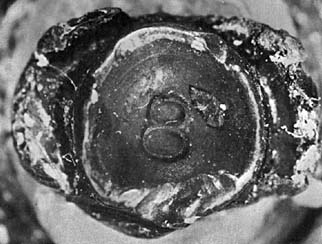
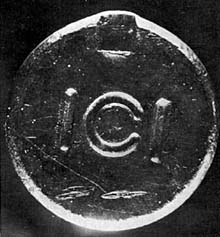
The lead bullets recovered from the bodies of Mr and Mrs Crewe were embossed with the number "8". The shell case fired from Thomas's rifle was marked with "ICI" in large san-serif capitals. And in 1973 Dr Sprott was informed that older ICI .22 bullets had "8" marked on them, whilst newer ones were marked "18" or "19". There was also a variety of letter styles on the shells. The older ICI shell cases had "ICI" in decorative or smaller letters.

But the shiny shell case fired from Thomas's rifle and found in the Crewe's garden had ICI in big simple letters. Therefore the more recently-made shell case from Thomas's rifle could not have fired the older bullets found in the Crewe's bodies. Dr Strott advertised for .22 bullets and he was sent 26,000 from all over the country. Not one combination of "8" bullet and large ICI was found.

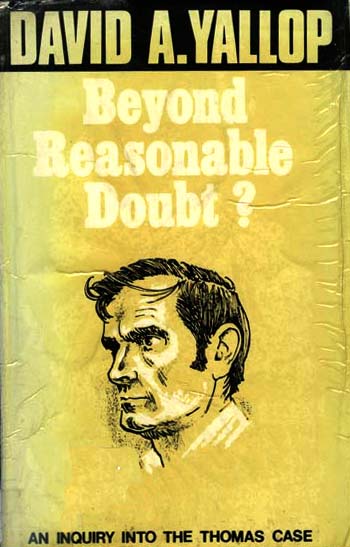
Thomas spent nine years in jail before being pardoned by Prime Minister Robert Muldoon. He returned home to Pukekawa on 17 December 1979. David Yallop's book "Beyond Reasonable Doubt," calls Hutton's investigation of Thomas 'one of the most crass, banal, amateur investigations ever undertaken in the country's history, a game where evidence was put in and taken out to serve one purpose: that Thomas be convicted.'

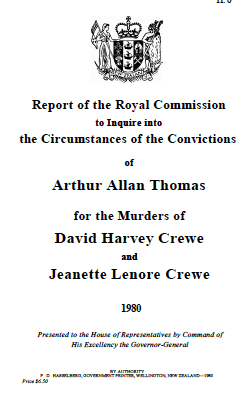
Shortly after the second trial of Thomas, Detective Inspector Hutton was demoted to the uniformed branch, and he resigned from the police force not long afterwards. However Hutton was never prosecuted for his crime, although the Royal Commission of 1980 uncovered absolute proof of his guilt.

Who killed Harvey and Jeanette Crewe?

1. Ian Wishart reckons that the murderer was Inspector Hutton's assistant, police sargeant Len Johnston. Yeah, right!

2. Was it Arthur Thomas? His motive - had courted Jeanette, but she had married another man. The circumstantial evidence - his .22 rifle was the only one found in the neighbourhood with six right-handed riflings. However, one of the rifling ridges on Thomas's .22 was damaged and made a distinctive mark on a bullet, whilst none of the bullets from the bodies showed this distinctive mark.

3. Was it Len Demler? He had a powerful motive: The farm he had managed for 30 years belonged to his late wife. However, when she died, she did not leave the farm to him, but to Jeanette. He had the means: although he did not have a .22 rifle registered to his name, the Crewe household did, and this rifle was never found. He also had plenty of opportunity, living nearby and frequently visiting the Crewe house. If any passerby had seen him there after the shootings, they would have noticed nothing unusual. But police found evidence that eliminated him as a suspect.

4. Was it Jeanette Crewe? When Jeanette's body was examined, bruises were found on her face. Dr Sprott's theory was that her husband had beaten her up, and she grabbed the household .22 and shot him in a fit of rage, then shot herself. Len Demler knew there would be no life-insurance payout for suicide, so he disposed of the bodies, off the Tuakau Bridge and into the Waikato River, to make it look like a double murder.

Harvey Crewe went berko, bashed his wife
She grabbed his gun and fired to save her life
      Then she saw her husband dead
      Turned the gun to her own head
And Len Demler hid the two of them from view
      In the cold in the cold and murky depths of the Waikato


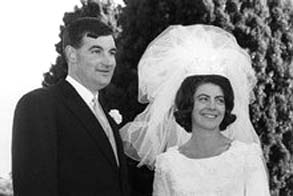
Harvey and Jeanette Crewe


Inspector Hutton at Crewe farmhouse


Old "8" bullet from Harvey's body


Recently-made shell with large lettering
planted by Hutton


Songlist - Home

This webpage put on the NZ Folksong website on November 1, 2010

website metrics